

Many Indians living abroad dream of building their own home in Pune, whether for their parents, for retirement, or as a long-term investment. The biggest worry is always the same: “How do I manage construction when I’m not there?” This guide explains what NRIs need to know in 2026: what you are allowed to buy, how payments work, which documents you need, how approvals and construction are handled remotely, and how to protect yourself from delays and cost overruns.
1. Can an NRI buy a plot and build a house in Pune?
Yes. Under FEMA rules, NRIs and OCI cardholders can buy residential and commercial plots in India without prior RBI approval, and build a house on them. What NRIs cannot buy is agricultural land, farmhouses or plantation property. So before you pay for a plot on the outskirts of Pune, confirm that it is non-agricultural (NA) or in a residential zone.
If you already own ancestral or inherited land, the rules are different. Check its status with a lawyer before planning construction.
2. How payments must be made
- Pay through normal banking channels only: inward remittance from abroad, or your NRE, NRO or FCNR account in India.
- Cash, traveller’s cheques and foreign currency notes are not allowed.
- Keep every bank transfer receipt and invoice. You will need them for tax, for repatriating money later, and for loan records.
- NRI home loans are available from most Indian banks for buying a plot and for construction, usually released in stages as the building progresses.
Tax rules (TDS when buying from or selling as an NRI, and repatriation limits) change from time to time. Always confirm the latest position with a chartered accountant.
3. Documents you will need
- Passport and visa / OCI card
- PAN card (needed for property registration and tax)
- Overseas address proof and Indian address for correspondence
- Plot papers: sale deed, 7/12 extract or property card, NA order, approved layout, and a title search report from a lawyer
- A Power of Attorney (POA) if someone in India will act for you
4. Power of Attorney: who acts for you in India
Most NRIs appoint a trusted family member through a specific Power of Attorney that names the exact property and the tasks allowed (signing the purchase, applying for permissions, signing contracts). A POA signed abroad is usually attested at the Indian Embassy or Consulate and then registered in India. Keep the POA limited to what is needed. A general, unlimited POA is risky.
5. Building permission
Every house in Pune needs building permission from the right authority (PMC, PCMC or PMRDA), a Commencement Certificate before work starts, and an Occupancy Certificate at the end. Most of this is now online, and your architect can handle it using your POA. Read our step-by-step PMC building permission guide for the full process.
6. Managing construction from abroad
This is where most NRI projects go wrong: unclear estimates, slow progress, and quality problems that are only discovered on the next visit. Here is how to stay in control:
- Choose one turnkey firm that handles design, approvals and construction, so there is one point of responsibility instead of five contractors.
- Fix the scope and specifications in writing: drawings, brand list for materials, and a detailed estimate before work starts.
- Pay in stages linked to work done (plinth, each slab, brickwork, finishing), never large advances.
- Ask for weekly updates with site photos and short videos on WhatsApp, plus a monthly progress report.
- Do video site walkthroughs at key stages: foundation, before slab casting, before plastering.
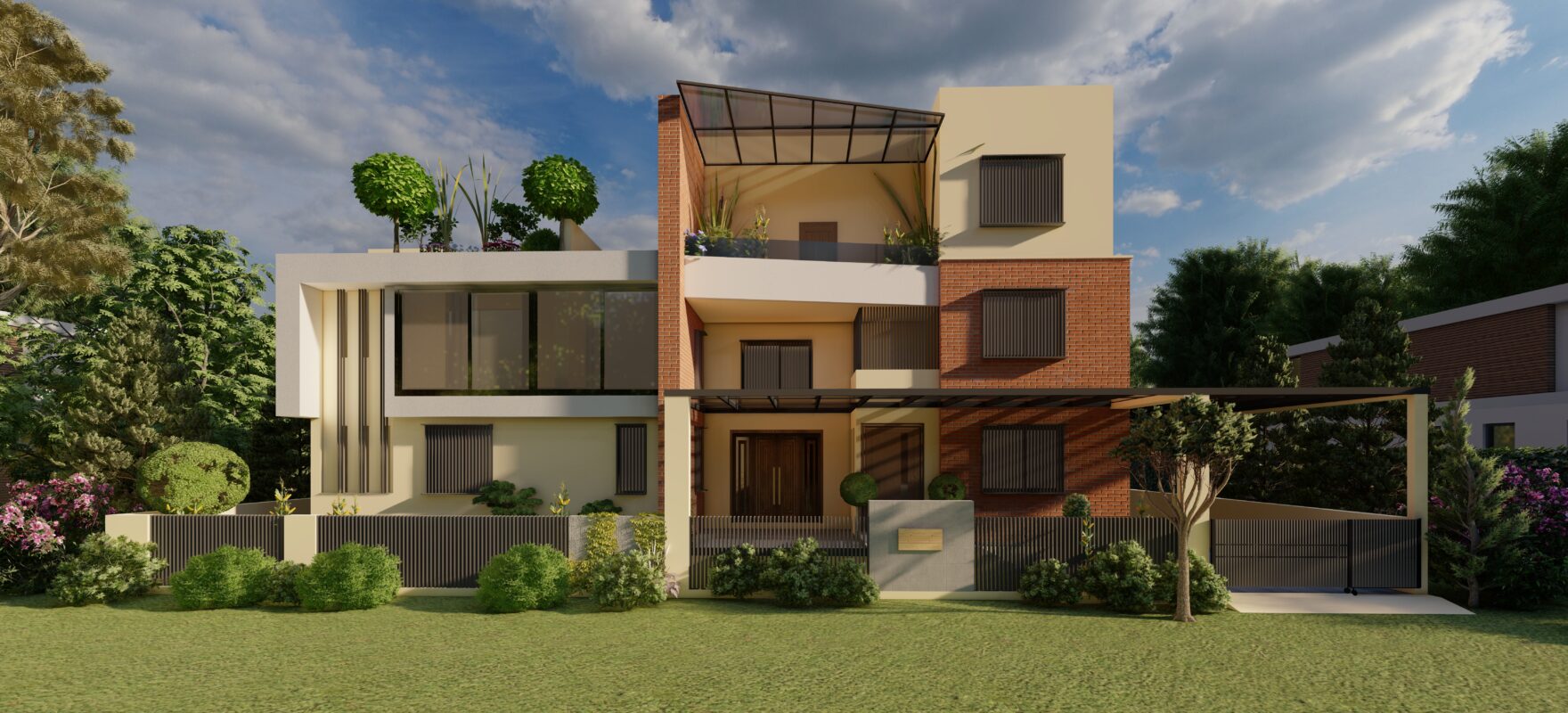
- Approve 3D designs early. Seeing photorealistic 3D renders of your home before construction avoids expensive changes later.
- Plan one or two visits at the most important moments, such as the final finishes and handover.
7. What will it cost?
Construction cost depends on the size of the house, the specifications and the finishes. Our bungalow construction cost guide for Pune explains typical per-square-foot ranges and what is included. Add plot cost, approval charges, professional fees and interiors to get your full budget.
8. Common mistakes NRIs should avoid
- Buying land without checking that it is non-agricultural and has a clear title
- Starting construction before the Commencement Certificate
- Paying contractors large advances or in cash
- Relying only on a relative to supervise without a written contract and schedule
- Making design changes after the slab is cast
- Not keeping payment records for tax and repatriation
How SB Square Projects helps NRI clients
Since 1995 we have delivered homes, commercial buildings and large government projects, including roads, bridges and flood protection works (see our government projects). For NRI families we offer a single, accountable team: plot check, 3D design, building permission, turnkey construction, interiors and handover, with regular photo and video updates so you always know what is happening on site. Learn more about our NRI and international projects service.
Frequently asked questions
Can I build on land my parents own?
Yes, with their consent. The permission application is made by the owner, and ownership documents must be in order. Many families later gift or transfer the property; take legal advice first.
Do I need to be in India to sign the contract?
No. Contracts can be signed digitally or by your POA holder, and design meetings can happen on video calls.
How long does it take to build a bungalow?
Typically 12 to 18 months from design to handover, depending on size, approvals and finishes.
This guide is general information, not legal or tax advice. Please confirm current rules with a lawyer and a chartered accountant.
Planning to build in Pune from abroad? Contact us or WhatsApp +91 92261 69243 to book a video consultation.