

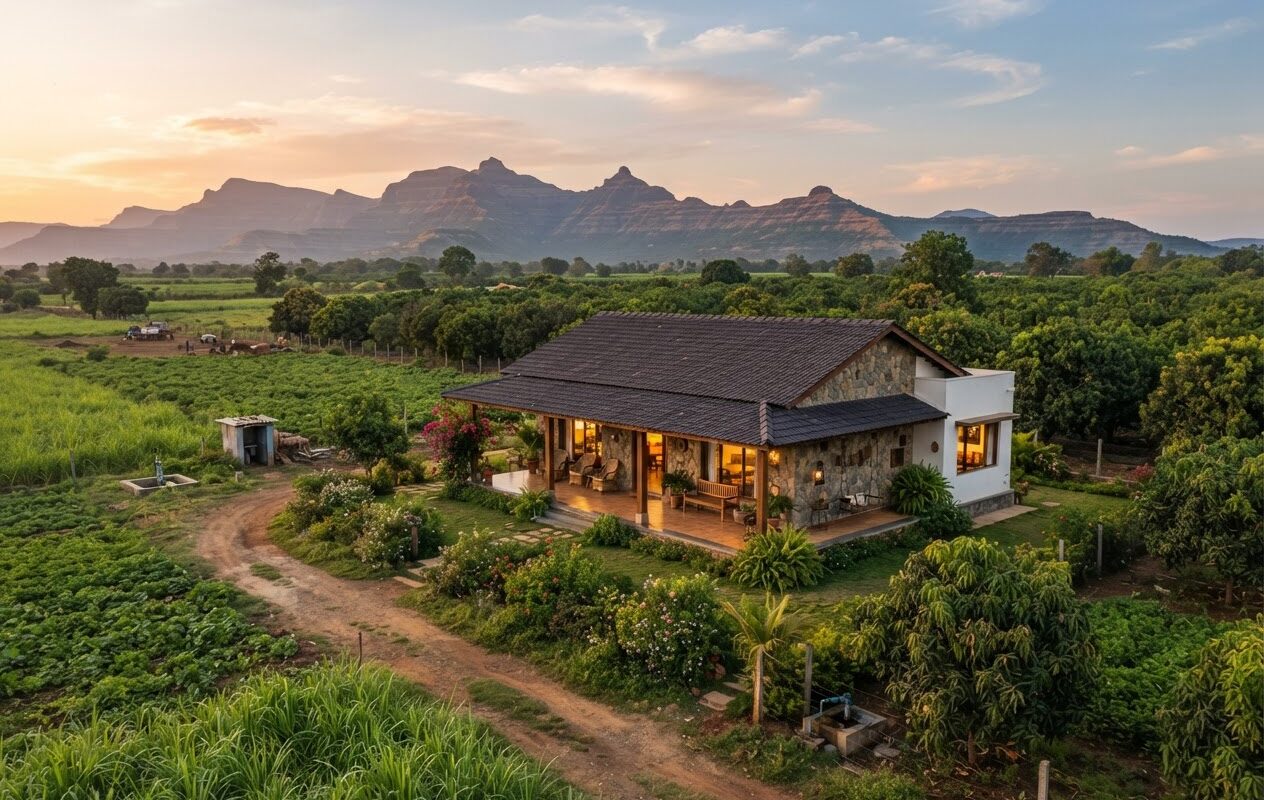
A weekend farmhouse near Pune is a dream for many families: a quiet plot in Mulshi, Maval, Bhor or near the Khadakwasla backwaters, a verandah facing the hills and space for trees and a vegetable garden. But a farmhouse on rural land is very different from a bungalow in a city society. The land records, the zone, approvals, water, power, access and the monsoon all decide whether the project goes smoothly or gets stuck.
This guide explains what to check before you buy or build, what typically drives the cost, and how to plan the design so the house works well for decades. SB Square Projects LLP has been working in architecture, interiors, turnkey construction and building permissions in and around Pune since 1995, and these are the questions we ask on every rural site visit.
1. Start with the land, not the house design
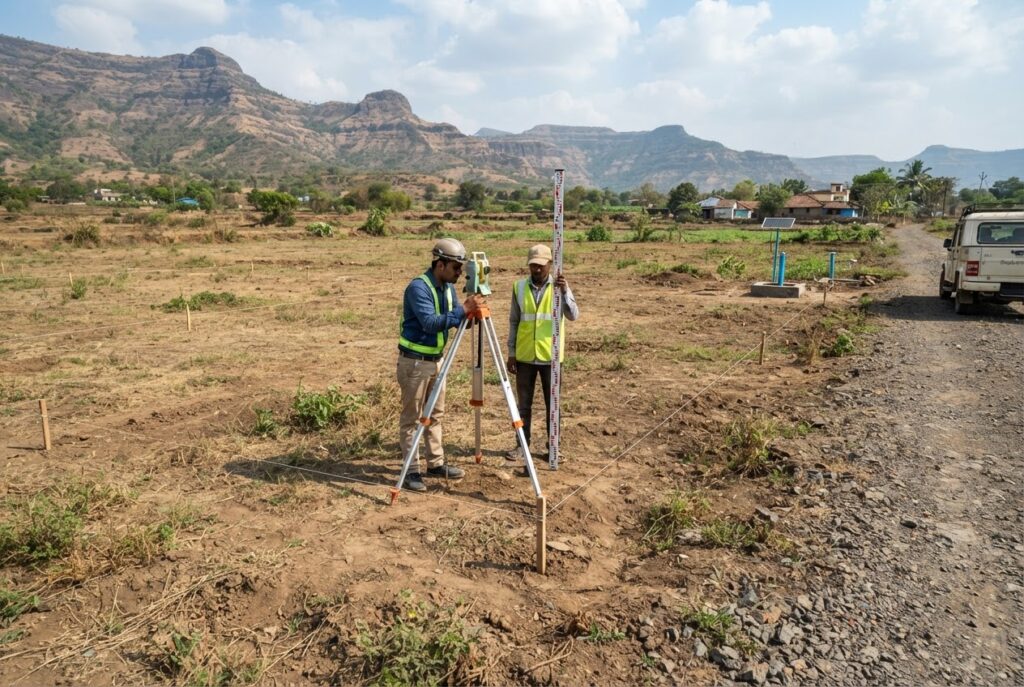
Most farmhouse problems begin before construction, at the land purchase stage. Before you pay a token amount, get these points checked by a lawyer and an architect:
- Title and land records: the 7/12 extract (Satbara) and mutation entries should match the seller’s name, area and survey/gat number. Records can be viewed on the state’s Mahabhumi land-records portal.
- Who can buy: purchase of agricultural land in Maharashtra is regulated under the Maharashtra Tenancy and Agricultural Lands Act, and buying by non-agriculturists is restricted except in specific cases. Confirm your eligibility with a property lawyer first.
- Land class: Class-I (free-hold) land is simpler. Class-II, tenancy or leasehold land usually needs prior permission before transfer or change of use.
- Zone in the development plan: whether the plot is in an agricultural zone, a residential zone or another zone decides what you can build and how much.
- Access, water and power: a legal, all-weather access road, a reliable water source and a nearby electricity line save a lot of money and delay later.
2. Approvals: NA, zone rules and the planning authority
Many areas around Pune that are outside PMC and PCMC limits fall under PMRDA as the planning authority, so building permission is usually taken from PMRDA or the local authority that applies to your village. Our guide to PMRDA building permission in Pune explains that process step by step.
Two rule changes are worth knowing:
- NA permission: under the Maharashtra Land Revenue Code (Second Amendment) Act, 2025, land that is already zoned for residential or other non-agricultural use no longer needs a separate NA permission from the Collector. A one-time conversion premium linked to the Ready Reckoner value is payable instead, and Class-II and leasehold land still need prior permission.
- Agricultural zone: if your plot is in the agricultural zone, what you can build (built-up area, height, setbacks) is controlled by the Agricultural Zone provisions of the UDCPR (Unified Development Control and Promotion Regulations) for Maharashtra. These limits are much tighter than in a residential zone.
Rules, premiums and fees change from time to time and depend on the exact plot, so always check the latest rules for your plot with the planning authority or your architect before you finalise the design.
3. Pre-purchase and pre-design checklist
| What to check | Why it matters | Who helps |
|---|---|---|
| 7/12 extract, mutation entries, search report | Clear title, correct area and owner | Property lawyer |
| Buyer eligibility for agricultural land | Purchase by non-agriculturists is restricted | Property lawyer |
| Zone in development / regional plan | Decides whether and how much you can build | Architect, planning authority |
| Land class (Class-I / Class-II / leasehold) | Class-II and leasehold need prior permission | Lawyer, revenue office |
| Access road width and legal right of way | Needed for approvals, construction vehicles and daily use | Architect, surveyor |
| Water source and soil | Borewell yield and soil type affect foundations and budget | Structural engineer, local driller |
| Electricity connection distance | A long line or transformer can add significant cost | Electrical contractor, MSEDCL |
4. Farmhouse construction cost: what drives the budget
For the house itself, a typical planning figure in the Pune region is similar to a city bungalow: roughly ₹1,800 to ₹2,200 per sq ft for a basic specification, ₹2,200 to ₹2,800 for a standard specification and ₹2,800 to ₹3,500 or more for premium finishes. These are indicative construction-only ranges (excluding land, approvals and interiors). Our bungalow construction cost guide explains what each level typically includes.
A farmhouse usually needs extra items that a city plot already has:
- Internal access road and parking surface
- Compound wall or fencing and a main gate
- Borewell, pump, overhead and underground tanks
- Septic tank and soak pit, or a small treatment system
- Electricity line extension, and often solar panels and backup
- Landscaping, retaining walls on sloping land and storm-water drains
- Transport of materials and labour to remote sites
Because these items vary so much between sites, the final cost needs a site-specific estimate after a site visit, soil check and finalised design.
5. Designing a farmhouse for the Sahyadri climate
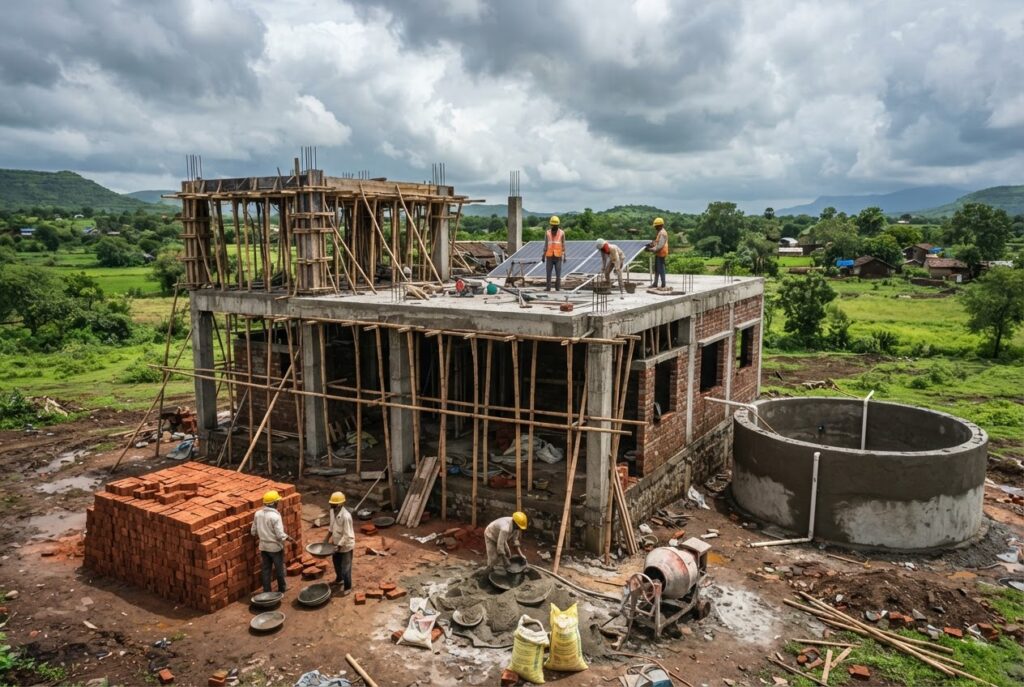
Many popular farmhouse areas west of Pune get heavy monsoon rain, strong winds on open slopes and hot dry summers. Good design handles all three:
- Roof and waterproofing: sloping roofs with deep overhangs shed rain better than flat terraces. If you choose a flat roof, plan proper slopes and waterproofing from the start.
- Plinth and drainage: a raised plinth, site grading and storm-water drains keep water away from the house.
- Orientation and ventilation: verandahs, cross-ventilation and shaded openings keep rooms comfortable with less air-conditioning.
- Low-maintenance materials: stone, exposed brick, treated timber and good-quality paints that suit a house that may be locked for weeks.
- Security and caretaker space: grilles, lighting and a small caretaker room are practical for a weekend home.
- Water and energy: rainwater harvesting, borewell recharge and rooftop solar reduce running costs.
For elevation ideas and planning tips, see our guide on bungalow plans and elevation in Pune; most of the same principles apply to a farmhouse.
6. Turnkey or separate contractors?
Rural sites are harder to supervise from the city. Material deliveries, labour availability and monsoon breaks need constant follow-up. A turnkey approach, where one team handles design, approvals and construction, gives you a single point of responsibility, one schedule and one budget to track. If you prefer separate contractors, plan for an architect or project manager to visit the site regularly and check quality at each stage.
Frequently asked questions
Can anyone buy agricultural land near Pune to build a farmhouse?
Not always. Purchase of agricultural land in Maharashtra is regulated under the Maharashtra Tenancy and Agricultural Lands Act, and non-agriculturists can buy only in specific cases. Check your eligibility with a property lawyer before you commit.
Do I still need NA permission for a farmhouse?
If the land is already zoned for residential or other non-agricultural use, the 2025 amendment to the Maharashtra Land Revenue Code removed the need for a separate NA permission; a one-time premium is paid instead. If the land is in the agricultural zone, the UDCPR agricultural zone rules decide what you can build. Check the latest rules for your plot.
How long does farmhouse construction take?
It depends on the approvals, size, design and the monsoon, which can slow work on rural sites. A realistic schedule can only be given after the design and approvals are clear, so plan your timeline with your architect and contractor before you start.
Planning a farmhouse near Pune? Start with a free site visit
SB Square Projects LLP can visit your plot, review the land papers and zone with you, and give you a site-specific design approach and estimate. We handle architecture and bungalow design, building permissions and turnkey construction, so you deal with one team from plan to handover.
Chat with us on WhatsApp to book a free site visit or send us your plot details.
Sources: Punekar News on the NA rule change; JSA Law note on the MLRC Second Amendment; JSA Law note on the MTAL Act amendment; PMRDA. Cost figures are typical planning ranges, not quotations.
Related: NA permission in Maharashtra after the 2025 change – what Pune plot owners need to know