

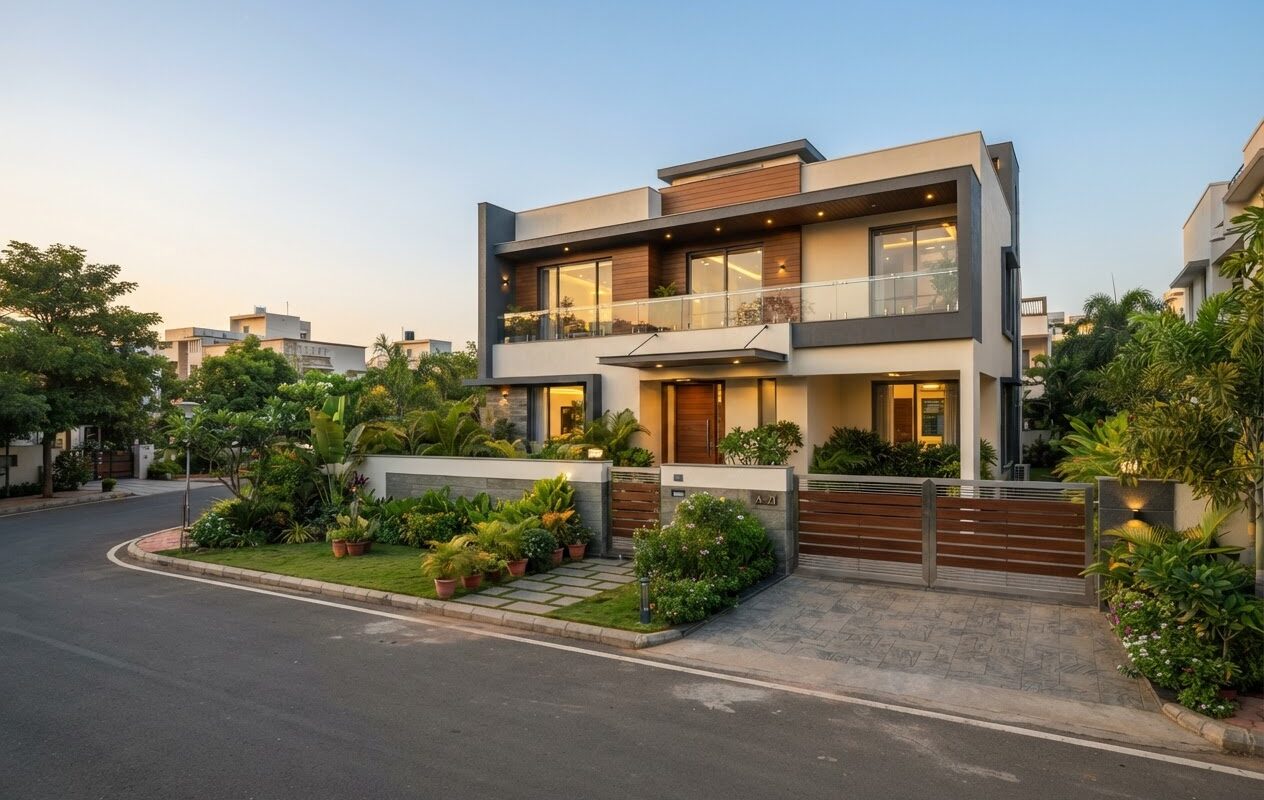
Your house is built, the paint is dry and the family is ready to move in. Then someone asks: “Do you have the occupancy certificate?” For many plot owners in Pune this paperwork comes as a surprise at the very end, even though it decides whether you can get water and electricity connections smoothly, take a home loan or sell later without problems.
This guide explains, in plain language, what an occupancy certificate (OC) is, how it differs from a completion certificate, the steps from plinth to OC, the documents usually asked for, and the mistakes that delay it. It is written for people building an independent house or bungalow in PMC, PCMC or PMRDA limits.
1. What is an occupancy certificate, and why does it matter?
An occupancy certificate is a document issued by the planning or municipal authority confirming that a building has been built as per the approved plans and is fit for occupation. It is issued after the authority inspects the completed building.
Why it matters in everyday life:
- Utility connections: water and electricity connections are often linked to the OC.
- Home loans: banks generally lend only against properties that have a valid OC.
- Society, conveyance and mutation: a missing OC can delay these processes.
- Resale and rent: a property with an OC is generally easier to sell or rent, and it helps protect you from action over unauthorised construction.
Which authority issues it depends on where your plot is: Pune Municipal Corporation (PMC), Pimpri Chinchwad Municipal Corporation (PCMC) or PMRDA. If you are not sure, our guides to PMC building permission, PCMC building permission and PMRDA building permission explain how to check.
2. Completion certificate vs occupancy certificate
The two are often confused. The completion certificate is what your architect, engineer and structural engineer give to the authority, confirming the work was done as per the sanctioned plan. PMRDA’s official document list shows these as completion forms (Appendix H, with H-1, H-2 and H-3 certificates and a structural stability certificate) submitted as part of the OC application. The occupancy certificate is what the authority gives you afterwards.
3. The steps from plinth to occupancy certificate
- Plinth checking: when work reaches plinth level you intimate the authority. PMRDA’s list for plinth checking includes the intimation form, plinth-level certificates from your architect or engineer, a structural stability certificate from a licensed structural engineer and photographs of the construction.
- Complete the building as per the sanctioned plan: any change from the approved drawings should be discussed with your architect before it is built, not after.
- Collect the completion certificates and compliance papers (see the table below).
- Apply for the OC with the authority, along with the documents it lists.
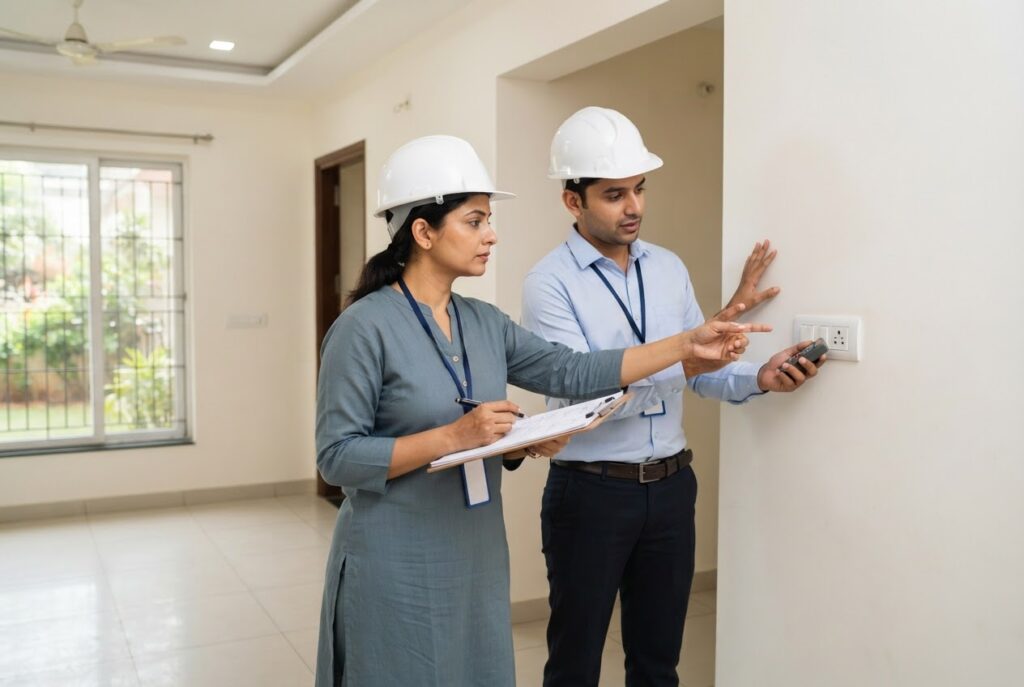
- Inspection: the authority inspects the completed building and, if everything matches, issues the OC.
4. Documents usually asked for
Every authority has its own latest checklist. As an example, the table below groups the items on PMRDA’s official list of documents for an occupancy certificate. PMC and PCMC may ask for different or additional papers, and what applies to you depends on your plot and building, so check the latest list for your plot.
| Group | Items on PMRDA’s list | When it applies |
|---|---|---|
| Site and land papers | Latest 7/12 abstract or property card; final demarcated layout; certified photographs of the completed building from all sides | All cases |
| Completion certificates | Appendix H form signed by owner and architect; H-1, H-2 and H-3 certificates; structural stability certificate | All cases |
| Safety and services | Final fire certificate; lift certificate; water assurance and sewerage compliance certificates; tree completion certificate | Where applicable |
| Green requirements | Rainwater harvesting compliance (plot over 500 sq m); solar energy system compliance (plot over 4,000 sq m) | Depends on plot size |
| Part occupancy and plans | Indemnity bond for a part occupancy certificate; certified completion plan; record plan | Where applicable |

5. How to check an occupancy certificate online
- Identify the governing authority (PMC, PCMC or PMRDA) and open its official website.
- Look in the building permission or development approvals section for OC status, and search with the project name, address or CTS/survey number.
- For projects registered under RERA, you can also open the project on the MahaRERA project search and look in its uploaded documents.
Online records can be incomplete, and older properties may not be digitised. If you cannot find an OC online, visit the authority’s office and cross-check the project name, wing and survey number against your own papers.
6. Common mistakes that delay the OC
- Moving in before the OC is issued. It can create problems with utility connections, loans and enforcement. Check with your architect before you occupy.
- Changing the building from the sanctioned plan and discovering it only at inspection.
- Leaving certificates for the last week. Fire, lift, structural and sewerage papers need to be arranged well before you apply.
- Ignoring payment conditions. If you opted to pay a development premium in instalments, UDCPR (regulation 2.2.14) says the OC is granted in proportion to the payments made.
- Not checking the records. Wrong survey numbers or names on the 7/12 can hold up the file.
Frequently asked questions
Are the completion certificate and the occupancy certificate the same?
No. The completion certificate is given by your architect and engineers to the authority as part of the OC application. The occupancy certificate is issued by the authority after it inspects the building.
Can I get an occupancy certificate for only part of a building?
PMRDA’s checklist includes an indemnity bond for a part occupancy certificate, so it is a recognised route. Whether it is available for your building is the authority’s decision, so discuss it with your architect first.
What should I do if the OC does not show online?
Check that you are searching the right authority with the correct survey number, then visit the authority’s office. Older records may not be digitised.
Need help with your occupancy certificate? Talk to us
SB Square Projects LLP has worked in architecture, interiors, turnkey construction and building permissions in and around Pune since 1995. We can review your sanctioned plan, completion papers and what is still pending, and tell you what the authority is likely to ask for. See our architecture and interiors and real estate construction services.
Chat with us on WhatsApp for a free site visit or send us your details. Fees and timelines vary by authority and plot, so we will confirm what applies to you.
Sources: PMRDA list of documents for all permissions; Housing.com on checking OC online in Pune; Sobha on checking OC online; MahaRERA; Maharashtra UDCPR, regulation 2.2.14. Rules and checklists change, so check the latest requirements for your plot.