


Cracks in a column, rust stains on a ceiling, a terrace that leaks every monsoon: in an older building these are not just cosmetic problems. A structural audit is a detailed check of an existing building by a structural engineer to find out whether it is still safe and what repairs it needs. In Pune, housing societies are expected to get one done at regular intervals, and the civic bodies act on buildings they consider dangerous. This guide explains when a structural audit is needed, what happens during one, what the report should contain and what to do after it.
Worried about cracks or leakage in your building? WhatsApp us a few photos and the building’s age and we will tell you what to check first and whether an engineer’s inspection is the right next step.
What is a structural audit?
A structural audit is an engineering health check of a building that already exists. A qualified structural engineer inspects the structure (foundations where visible, columns, beams, slabs, staircases, terraces, parking and common areas), records defects, carries out tests on the concrete where needed and gives a written report. The report says how safe the building is, which defects are serious and what repairs, strengthening or further investigation are recommended.
It is different from the structural design done for a new building. For new construction, the structural engineer designs the frame and certifies its stability for building permission. An audit looks at a building after years of use, weather and changes made by occupants.

When is a structural audit needed in Pune?
For co-operative housing societies in Maharashtra, the model bye-laws require a structural audit at regular intervals based on the age of the building. Many societies follow the schedule below. Bye-laws and civic rules can change, so check the latest rules that apply to your society and building.
| Building age | Audit frequency (co-operative housing society bye-laws) | What to do |
|---|---|---|
| Up to 15 years | No fixed age-based interval in the schedule | Fix leaks and cracks early; get a check after any major damage or before adding load |
| 15 to 30 years | Once every 5 years | Plan the audit with the society committee and keep the report on record |
| Above 30 years | Once every 3 years | Act on the report promptly; follow up on urgent repairs before the monsoon |
Apart from the society schedule, a structural audit makes sense when:
- The civic body sends a notice. The Pune Municipal Corporation (PMC) and Pimpri Chinchwad Municipal Corporation (PCMC) survey old and dangerous buildings, especially before the monsoon, and can issue notices, order occupants to vacate or demolish structures they find unsafe.
- You see warning signs such as wide or growing cracks, rust stains, spalling concrete, sagging slabs or beams, or persistent dampness.
- You plan to add a floor or make major changes. Additional floors need building permission and a structural stability certificate from a licensed structural engineer, so the existing structure must be checked first.
- You are buying an old house or flat and want to know the repair liability before you pay.
Warning signs you should not ignore
Most structural problems in older Pune buildings start with water. Leakage from terraces, bathrooms, ducts and external walls reaches the steel bars inside the concrete. The steel rusts and expands, which cracks and pushes off the concrete cover. Look out for:
- Cracks in columns, beams or slabs, especially diagonal cracks or cracks that keep widening
- Rust stains or exposed steel bars on ceilings, balconies and parking columns
- Concrete pieces falling from chajjas, balconies or the underside of slabs
- Sagging or visibly bent slabs and beams
- Damp patches and seepage that return every monsoon
- Cracks where walls meet columns, or doors and windows that suddenly start jamming
Not every crack is dangerous; plaster and shrinkage cracks are common. The point of an audit is to separate harmless defects from structural ones, so that money goes into the right repairs.
What happens during a structural audit
The exact scope depends on the building and the engineer, but a typical audit follows these steps:
- Document review: available drawings, approvals, past repair records and the history of changes made to the building.
- Visual inspection: a floor-by-floor and area-by-area survey of columns, beams, slabs, terraces, ducts, staircases and parking, with photographs and a defect list.
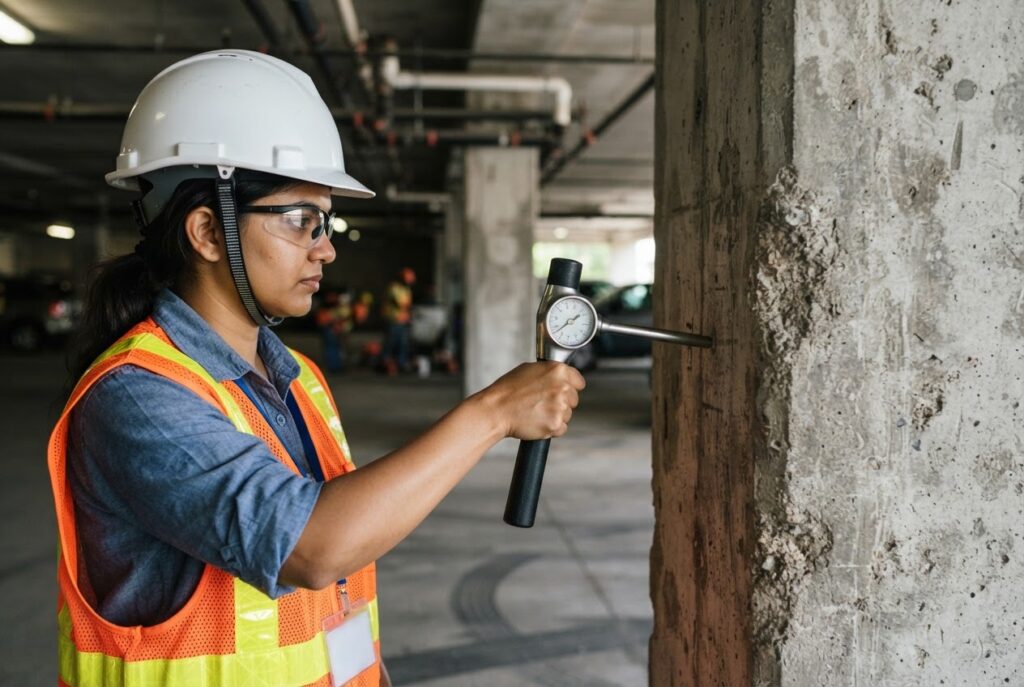
- Non-destructive and other tests on selected members where the engineer needs more information (see the table below).
- Analysis and report: the engineer classifies the defects, recommends repairs or strengthening and may give an indicative repair cost.
| Common test | What it helps the engineer judge |
|---|---|
| Rebound hammer | Surface hardness of concrete, used as an indicator of its strength |
| Ultrasonic pulse velocity | Quality and uniformity of concrete, and hidden cracks or voids |
| Core test | Compressive strength from a small sample drilled out of the member |
| Half-cell potential | Likelihood that the steel bars inside the concrete are corroding |
Not every building needs every test. A good engineer chooses tests based on what the visual inspection shows.
What the audit report should contain
Ask for a report you can act on, not just a certificate. A useful structural audit report includes:
- Building details, date of inspection and the engineer’s name and qualifications
- Observations for each part of the building, with photographs
- Test locations and results, with what they mean in plain words
- Defects grouped by urgency: what needs immediate attention and what can be planned
- Recommended repair, retrofitting or strengthening methods
- An indicative estimate of the repair work, where the engineer provides one
If the report says a part of the building is unsafe, act on it immediately and inform the occupants. Do not delay urgent repairs until the next audit.
After the audit: planning the repairs
The audit tells you what is wrong; the repair work is where most of the money and effort goes. Typical repairs in older buildings include treating corroded steel and rebuilding damaged concrete with repair mortar, jacketing or strengthening weak columns and beams, crack injection, and waterproofing terraces, ducts and external walls so the damage does not return.
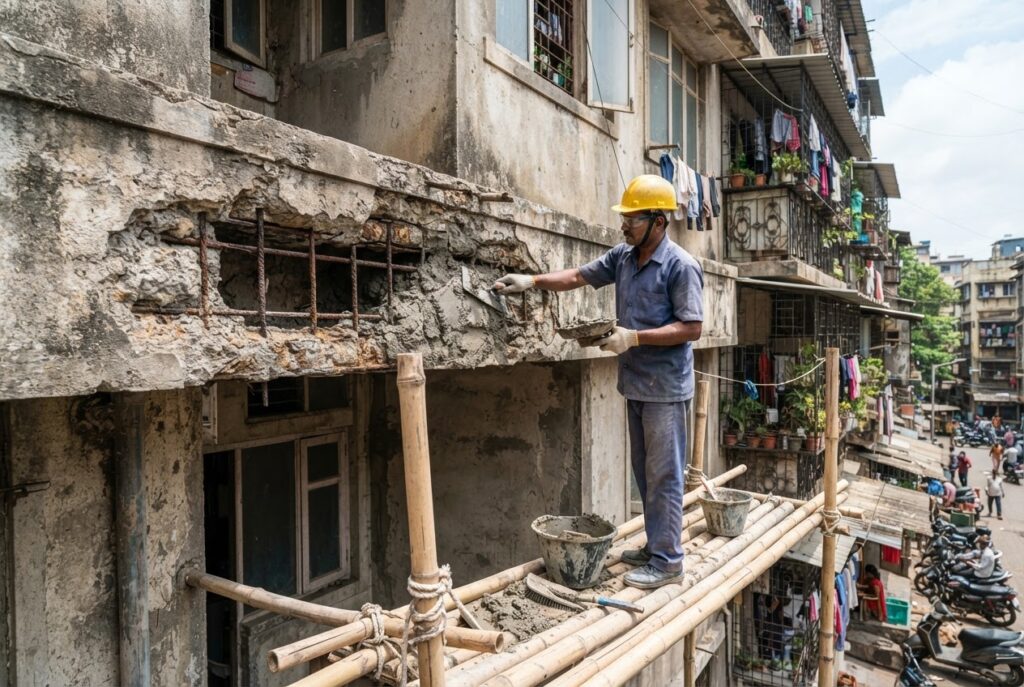
Repair cost depends on the size of the building, the extent of damage, the methods the engineer specifies and access (scaffolding, occupied flats, parking). There is no reliable per-square-foot figure for audit repairs; get a site-specific estimate based on the engineer’s report. For some very old buildings, the report may lead the society to compare major repairs with redevelopment.
Keep the structural engineer involved during repairs. Waterproofing alone protects a slab but does not repair a damaged one, as we explain in our terrace waterproofing guide.
Frequently asked questions
Is a structural audit mandatory for an independent bungalow?
The age-based schedule above comes from the co-operative housing society bye-laws, so it applies to societies. For an independent house, an audit is strongly advisable if the building is old, shows warning signs, has received a civic notice, or if you plan to add a floor. Check the latest rules for your property with the planning authority.
Who can carry out a structural audit?
A qualified structural engineer should carry out the audit and sign the report. If you are responding to a notice from PMC or PCMC, ask the civic office whether the engineer needs to be on its registered or approved list.
Can we add a floor to an old house after the audit?
Possibly. The structural engineer checks whether the existing foundations, columns and beams can take the extra load, and the architect checks whether the remaining FSI, height and setbacks allow it. Adding a floor needs building permission; see our PMC building permission guide.
What if the audit finds serious defects?
Urgent defects should be made safe first, with props or by restricting use if the engineer advises it, followed by repairs as per the engineer’s specification. Ask the engineer to inspect the work and update the report once repairs are complete.
Get help with your structural audit and repairs
SB Square Projects LLP has worked in architecture, interiors and construction in Pune since 1995. If you have an audit report or visible damage, share it with us. We coordinate with licensed structural engineers, help you understand the report and plan the repairs, and can execute the repair, waterproofing and renovation work. WhatsApp SB Square, see our turnkey construction services, or visit our building permission consultant page if you plan to add a floor.
Related: Home renovation cost in Pune · Terrace waterproofing in Pune
Related: Redevelopment vs renovation in Pune: how to decide for an old building
Get Pune building permission, design and cost updates by email. Occasional updates from SB Square; unsubscribe anytime.
Sources: Maharashtra co-operative housing society model bye-laws on structural audit frequency, as summarised by MyGate and Housing-Society.com; Free Press Journal and Punekar News on PMC action against dangerous buildings. Rules and procedures change; check the latest requirements for your building.